Air pollution
Air pollution is one of the biggest problems in developing nations such as China, India, Saudi Arabia, and others. It can be measured based on the concentration of particulate matter (PM) in the air, especially fine particles like PM2.5 and PM10, which are small enough to penetrate deep into the lungs and even enter the bloodstream. PM2.5 refers to particulate matter with a diameter of 2.5 micrometers or less, and its levels are often used as a key indicator of air quality. These particles originate from various sources, including vehicle emissions, industrial activities, construction dust, and burning of biomass and fossil fuels. High levels of air pollution can lead to severe health issues such as respiratory and cardiovascular diseases, and they also contribute to environmental challenges like smog and climate change. Addressing air pollution requires coordinated efforts to reduce emissions, adopt cleaner technologies, and enforce stricter environmental regulations.
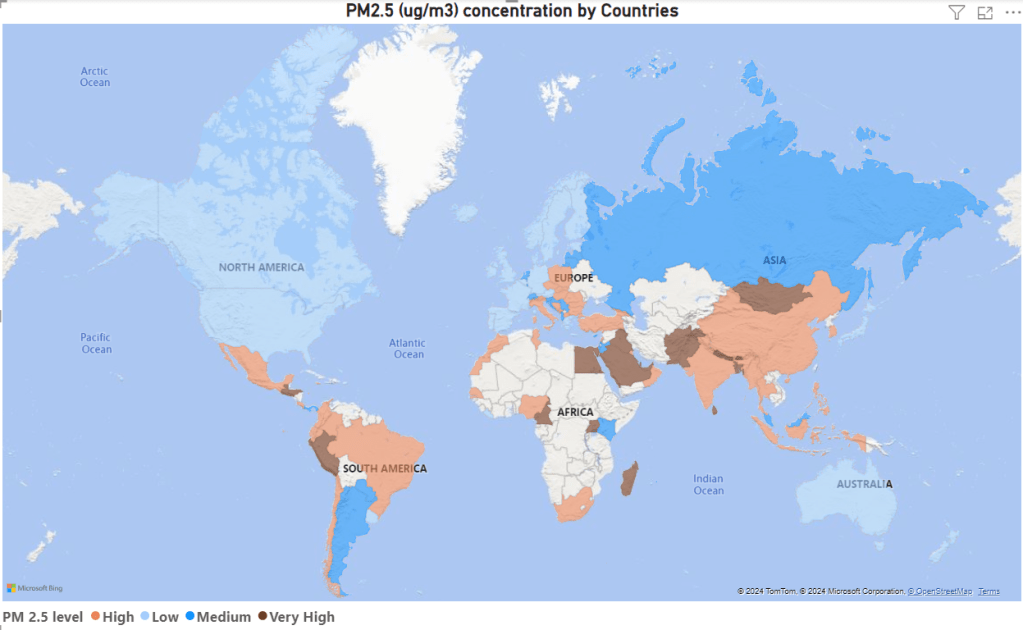
In the figure, we can observe the PM2.5 levels across the world. Countries like India, China, Mongolia, Saudi Arabia, Egypt, and Peru are among those suffering from significantly high PM2.5 levels. These elevated levels are primarily driven by factors such as industrial emissions, vehicular pollution, construction activities, burning of fossil fuels, and natural phenomena like dust storms.
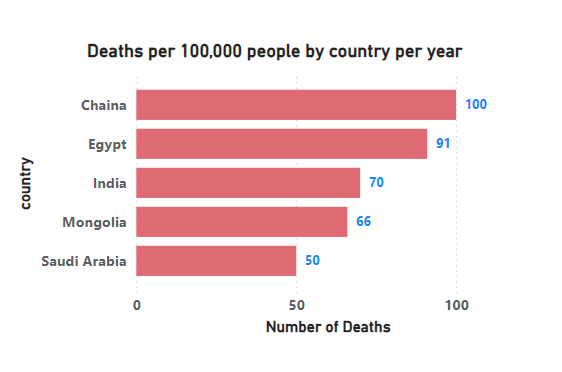
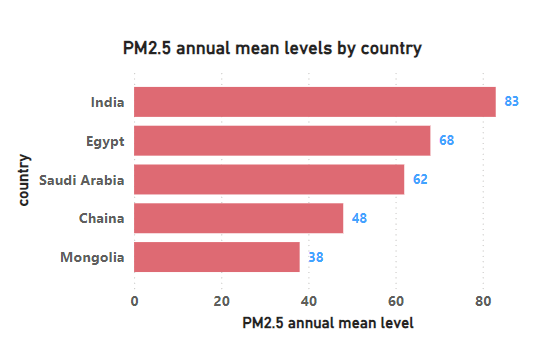
Exposure to PM2.5 is the second largest risk factor for premature death globally, following high blood pressure. Air pollution also contributes to numerous significant illnesses worldwide. In the figure below, we can see that the highest number of deaths due to air pollution occurs in China, followed by Egypt and India. However, India has the highest annual mean concentration of PM2.5.
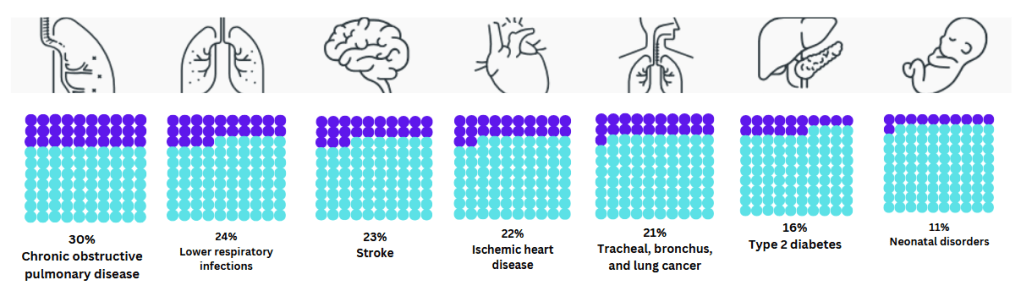
In India, PM2.5 is a major cause of death from chronic obstructive pulmonary disease, lower respiratory infections, stroke, ischemic heart disease, tracheal, bronchus, and lung cancer. It is also a contributing factor to type 2 diabetes and neonatal disorders.
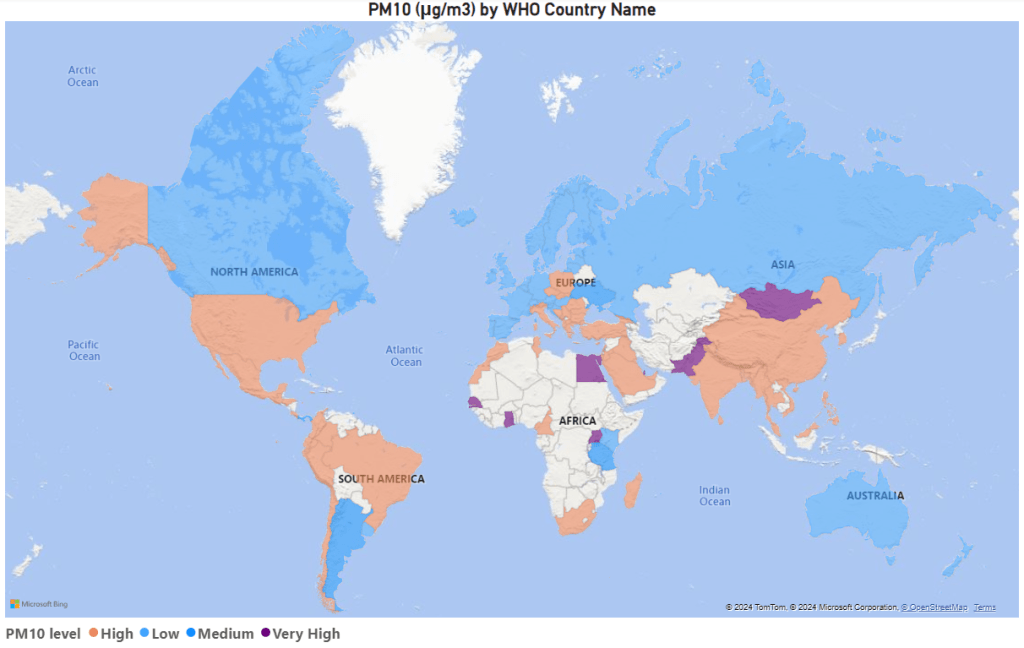
In addition to PM2.5, we can assess the PM10 levels globally. India, China, Mongolia, Saudi Arabia, Egypt, and Peru are among the countries experiencing notably high PM10 levels.
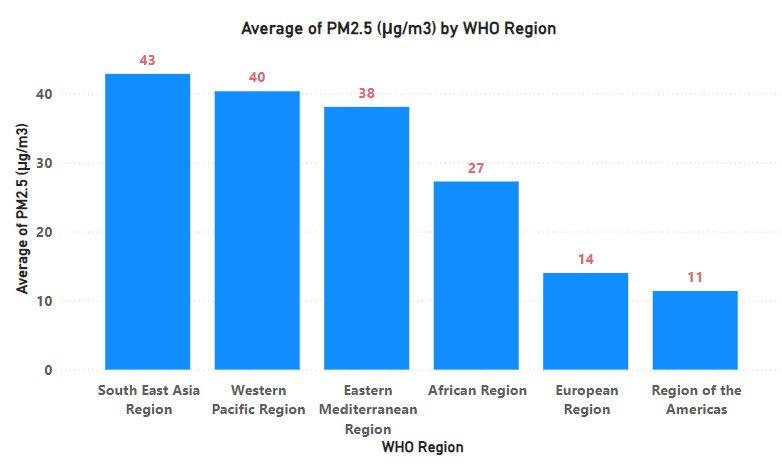
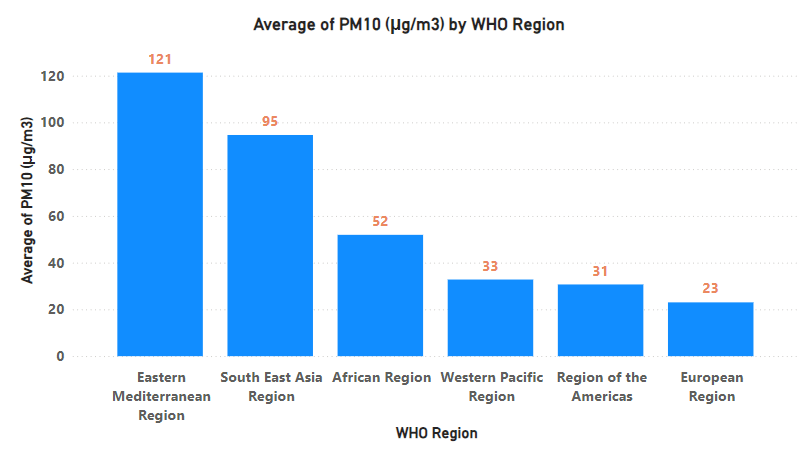
WHO has divided the whole world into many regions. The below diagram shows the average PM2.5 and PM10 concentrations over the regions.
Air pollutants can impact the air quality overall and also impact ecosystems of neighboring countries. Apart from health issues it contributes massively to climate change, threatens food security, and makes city inhabitants unsafe. To address the air pollution challenges, we need to come up with a solution globally and act on it more quickly than we did before.
 Portfolio